Introduction
Green coffee beans may look different from the familiar brown beans used to prepare your morning coffee, but they naturally contain caffeine. These unroasted coffee seeds have attracted attention from coffee enthusiasts, researchers, and people interested in understanding how caffeine affects the body.
So, how much caffeine is in green coffee beans?
Green Arabica coffee beans commonly contain around 0.7% to 1.7% caffeine by dry weight, while Robusta beans generally contain around 1.4% to 3.3%. These ranges are reported in scientific literature and can vary by variety, sample, and analytical method.
This means that 1 gram of green Arabica beans may contain roughly 7–17 milligrams of caffeine, while 1 gram of Robusta beans may contain approximately 14–33 milligrams. These figures describe caffeine present in the dry beans, not necessarily the amount that ends up in a drink.
Understanding this difference helps you estimate caffeine intake more accurately, compare coffee varieties, and make informed choices about green coffee beverages and supplements.
Table of Contents
- How Much Caffeine Is in Green Coffee Beans?
- How Much Caffeine Is in One Green Coffee Bean?
- Arabica vs. Robusta Caffeine Content
- Does Roasting Reduce Caffeine?
- Green Coffee Beans vs. Roasted Coffee
- What Affects Caffeine Content?
- How Much Caffeine Is in Green Coffee Extract?
- Is Green Coffee Caffeine Safe?
- Frequently Asked Questions
- Conclusion
How Much Caffeine Is in Green Coffee Beans?
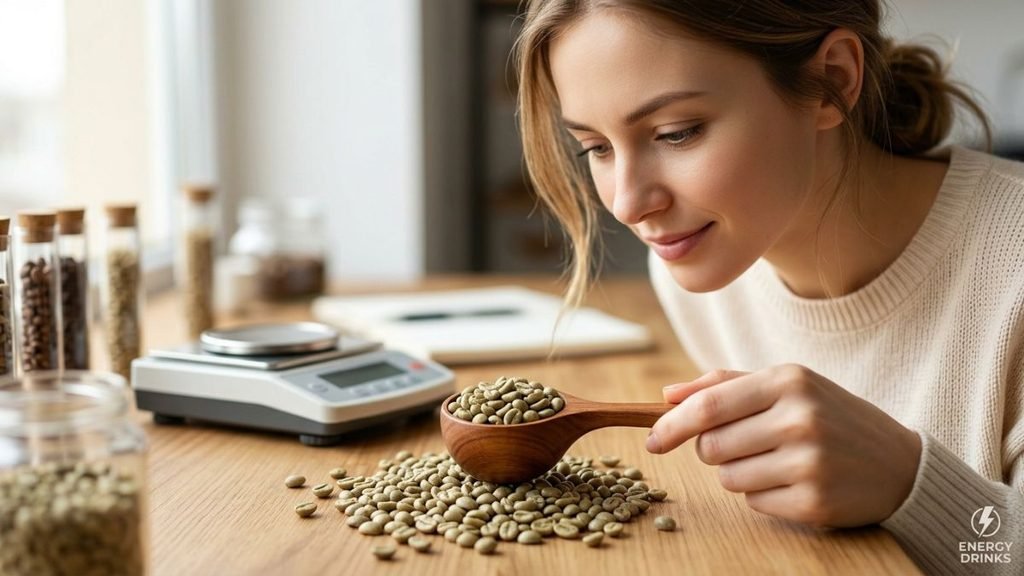
The caffeine content of green coffee beans depends primarily on the coffee species and variety. Growing conditions, bean characteristics, processing, and the method used to measure caffeine can also contribute to differences.
Green coffee beans are generally unroasted seeds from coffee plants. They contain caffeine naturally, along with chlorogenic acids and other compounds that change in concentration or composition during roasting.
Research reviews report the following approximate ranges for caffeine in green coffee beans on a dry-weight basis.
| Coffee type | Approximate caffeine by dry weight | Caffeine per gram |
|---|---|---|
| Arabica | 0.7%–1.7% | 7–17 mg |
| Robusta | 1.4%–3.3% | 14–33 mg |
These are broad literature ranges, not guaranteed values for every commercial batch..
What Do These Numbers Mean?
A caffeine concentration of 1% means that approximately 1 gram of caffeine is present in every 100 grams of dry coffee beans.
For example, if a hypothetical batch of green Arabica beans contains 1.2% caffeine by dry weight, the calculation is:
- 100 grams of beans: approximately 1,200 mg of caffeine.
- 10 grams of beans: approximately 120 mg of caffeine.
- 1 gram of beans: approximately 12 mg of caffeine.
These calculations estimate the caffeine present in the beans. They do not tell you precisely how much caffeine you will consume from a brewed beverage because not all caffeine necessarily transfers into the drink.
Why Is There No Single Exact Answer?
Coffee is an agricultural product, not a standardized source of caffeine. Different varieties can have different caffeine concentrations, even when they belong to the same species.
A 2020 study comparing green Arabica and Robusta beans found a significant difference between the two species, with Robusta generally containing more caffeine. Other research has also reported considerable variation among individual coffee varieties
For this reason, use published ranges as estimates rather than treating them as exact measurements for every bean you buy.
How Much Caffeine Is in One Green Coffee Bean?
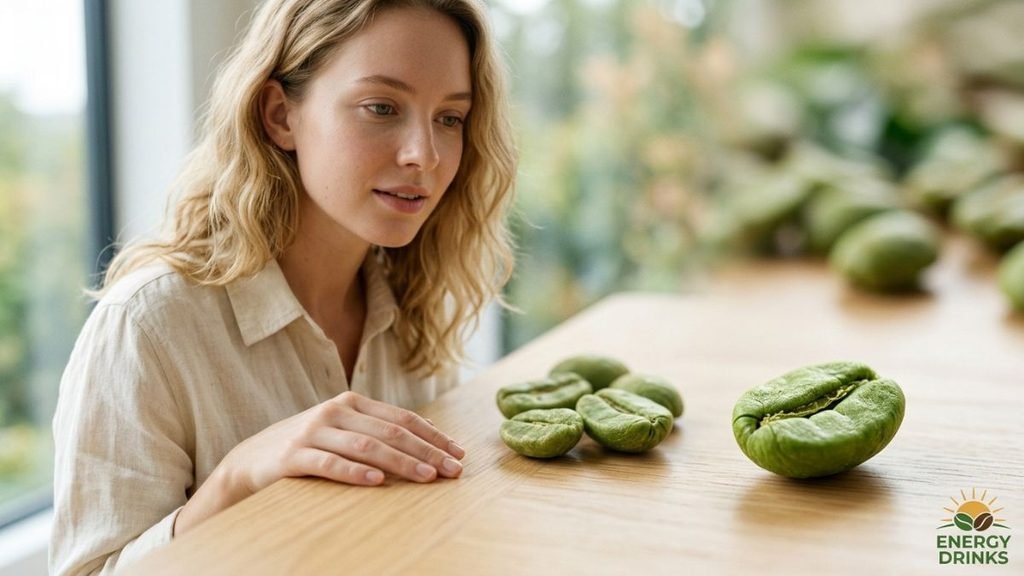
The amount of caffeine in one green coffee bean depends on both its weight and its caffeine concentration.
A larger bean may contain more total caffeine than a smaller bean of the same variety, even when both have the same caffeine concentration by weight.
For a practical example, suppose a green coffee bean weighs 0.15 grams and contains 1.2% caffeine by weight.
The estimated caffeine content would be:
0.15 grams × 1,000 mg per gram × 0.012 = 1.8 mg of caffeine.
This is an illustrative calculation, not a universal measurement. Actual bean weight and caffeine concentration can differ substantially.
Estimated Caffeine in Individual Beans
The following examples show how the amount changes when the bean’s weight or caffeine concentration changes.
| Bean weight | At 1% caffeine | At 2% caffeine |
|---|---|---|
| 0.10 g | 1 mg | 2 mg |
| 0.15 g | 1.5 mg | 3 mg |
| 0.20 g | 2 mg | 4 mg |
These values are mathematical estimates based on the assumed bean weights and concentrations. They are not laboratory measurements of specific coffee varieties.
Practical tip: If you want to estimate caffeine intake from green coffee beans, measuring a known mass of beans and checking species-specific research is more useful than counting individual beans.
Arabica vs. Robusta Caffeine Content
Arabica and Robusta are two major commercial coffee species. Although both naturally contain caffeine, their typical caffeine concentrations differ.
<|unsupported|>
Arabica generally has a lower caffeine concentration than Robusta. Robusta is often selected for coffee blends when a stronger caffeine contribution is desired, although taste and cost also influence blending decisions.
| Feature | Green Arabica | Green Robusta |
|---|---|---|
| Typical caffeine level | Lower on average | Higher on average |
| Commonly reported range | 0.7%–1.7% | 1.4%–3.3% |
| Flavor before roasting | Raw, grassy characteristics | Raw, earthy characteristics |
| Variation between samples | Present | Present |
| Suitable for caffeine comparisons | Yes, using measured data | Yes, using measured data |
Ranges are from a scientific review and can overlap.
Which Coffee Bean Has More Caffeine?
Robusta usually has more caffeine than Arabica. However, a particular Arabica sample and a particular Robusta sample should not be compared solely by species name if precise caffeine content matters.
Variety, sample composition, and testing methods can influence reported values.
It is also important to distinguish caffeine content from flavor. A coffee that tastes more bitter does not necessarily contain more caffeine, because bitterness depends on several compounds and preparation conditions.
Does Roasting Reduce Caffeine?
Roasting changes the physical and chemical properties of coffee beans. Green beans lose moisture and undergo reactions that create the familiar aroma, color, and flavor of roasted coffee.
However, roasting does not simply remove all the caffeine.
Research on coffee chemistry indicates that caffeine is relatively stable during ordinary roasting, although some losses can occur. Because beans lose moisture and other material during roasting, caffeine concentration expressed per gram of roasted coffee can differ from the concentration measured in the original green beans.
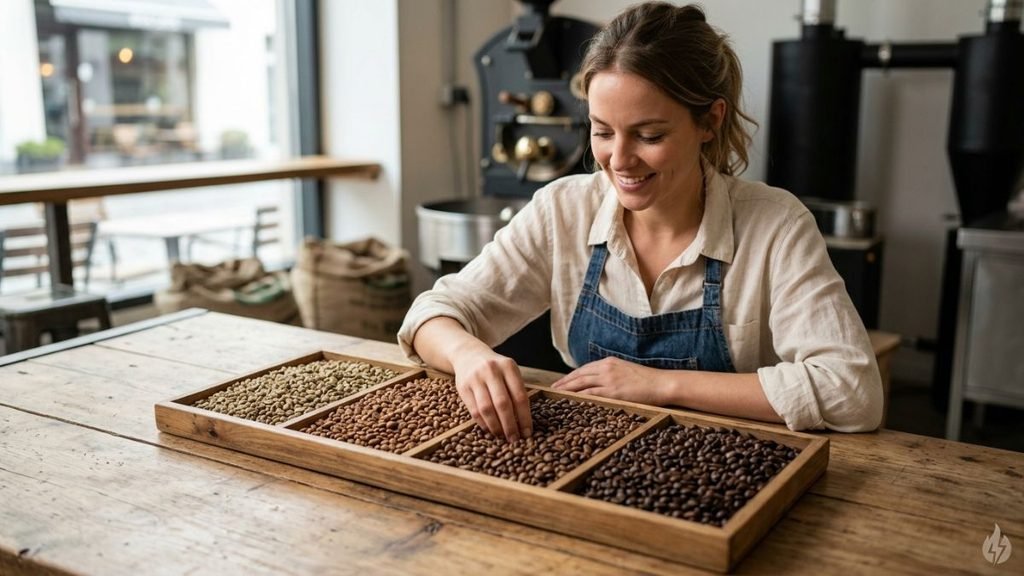
Green vs. Light, Medium, and Dark Roasts
- Green coffee: Unroasted beans retain their original structure and have not developed roasted coffee’s characteristic flavor.
- Light roast: Beans have undergone less roasting, and their mass and composition have changed.
- Medium roast: Additional chemical and physical changes occur during roasting.
- Dark roast: Beans typically lose more mass and develop more pronounced roasted flavors.
These categories do not establish a universal ranking of caffeine per bean or per cup.
If you compare equal weights of green and roasted coffee, the caffeine concentration per gram may differ because roasting changes bean mass. If you compare the same original beans before and after roasting, the total caffeine may remain relatively similar, with possible losses depending on the process.
Does Dark Roast Have More Caffeine Than Light Roast?
Not necessarily. The result depends on how the comparison is made.
A comparison by scoop volume may favor lighter-roasted beans because they are generally denser. A comparison by equal weight can produce a different result, while actual caffeine in a cup also depends on the brewing method and extraction.
Therefore, roast color alone is not a reliable way to determine the caffeine in your finished coffee.
Green Coffee Beans vs. Roasted Coffee
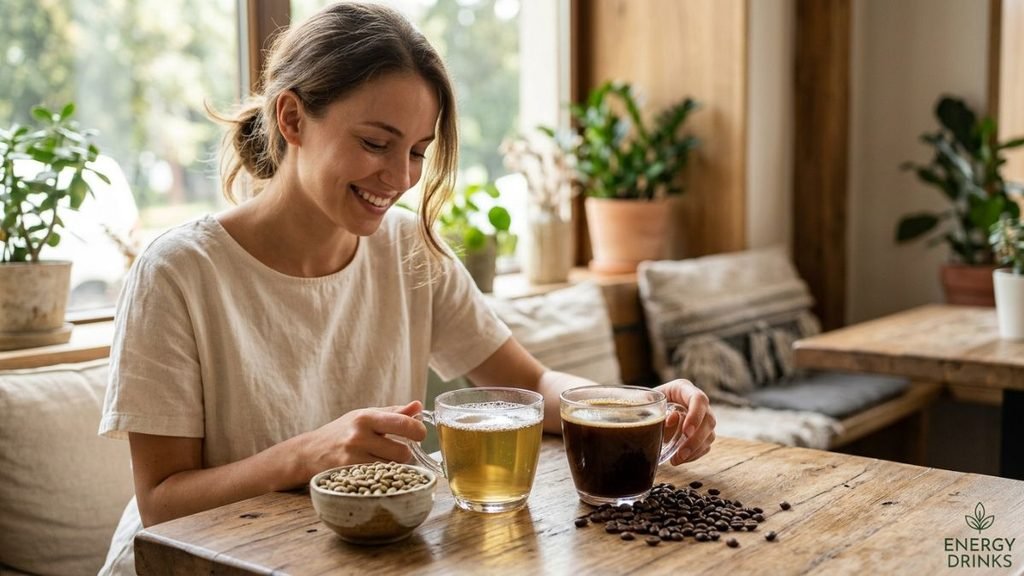
Green coffee beans and roasted coffee beans contain naturally occurring caffeine, but the amount you consume depends on how the beans are used.
Green coffee may be brewed as an infusion, roasted coffee is commonly ground and brewed, and green coffee extract is processed into a concentrated ingredient for certain products.
These are different forms of coffee and should not be assumed to deliver the same caffeine dose.
| Coffee form | What determines caffeine intake? | Important consideration |
|---|---|---|
| Whole green beans | Bean weight and caffeine concentration | Caffeine present is not the same as caffeine consumed |
| Green coffee infusion | Bean dose, preparation, and extraction | The amount transferred into water can vary |
| Roasted coffee beans | Bean type, weight, and roasting changes | Caffeine remains present after roasting |
| Brewed coffee | Coffee dose, water, brewing method, and serving size | Actual caffeine varies between drinks |
| Green coffee extract | Extraction process and product formulation | Check the product’s caffeine declaration |
How Much Caffeine Is in a Cup of Green Coffee?
There is no single reliable figure for every cup of green coffee. Its caffeine content depends on the quantity and type of beans used, the preparation method, the steeping time, and how efficiently caffeine moves into the water.
A cup prepared from green coffee beans should not automatically be assumed to contain the same amount of caffeine as a standard cup of roasted coffee.
For context, the US Food and Drug Administration reports that a typical 12-fluid-ounce serving of brewed, non-specialty coffee can contain approximately 113–247 mg of caffeine, depending on the coffee. This is a broad comparison, not a measured range for green coffee infusions.
If you need an accurate estimate, use a product with a declared caffeine amount or laboratory-tested data for the specific preparation.
What Affects Caffeine Content in Green Coffee Beans?
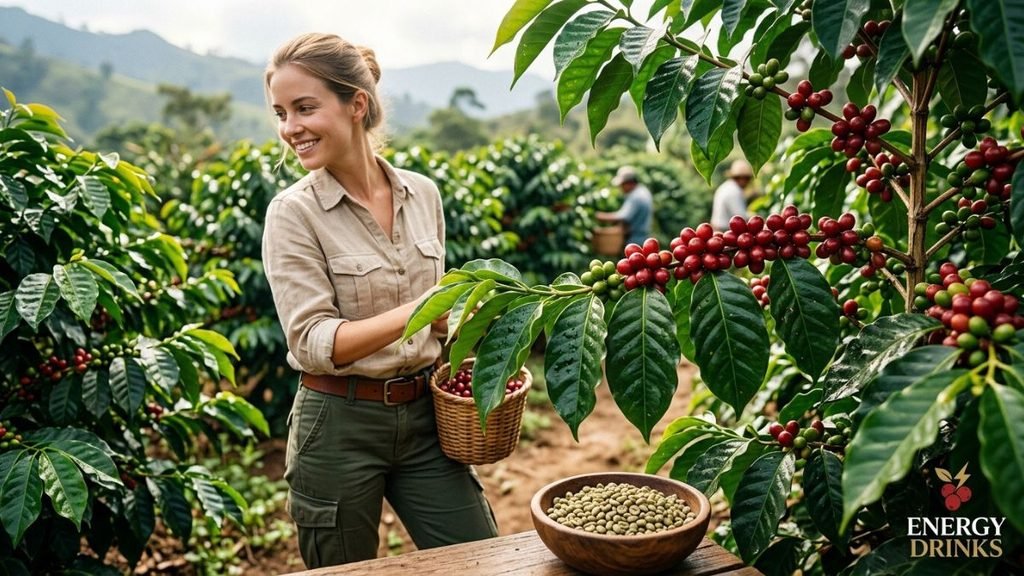
Several factors help explain why caffeine values differ between coffee samples.
1. Coffee Species and Variety
Species is one of the major factors affecting caffeine content. Robusta generally contains more caffeine than Arabica, but individual varieties within each species can differ.
Genetics play an important role in the natural chemical composition of coffee beans.
2. Growing Conditions
Coffee grows in different climates, soils, and elevations. Environmental conditions and agricultural practices can influence coffee quality and chemical composition, although species and genetics are important determinants of caffeine concentration.
It is not accurate to claim that a particular altitude or growing region always produces coffee with the highest caffeine level.
3. Bean Weight and Size
Bean size influences the amount of caffeine in an individual bean because larger beans can contain more material.
However, size alone cannot tell you the exact caffeine concentration. Two beans of similar size may still have different caffeine levels.
4. Processing and Storage
Post-harvest processing can change the physical and chemical characteristics of coffee. The effect on caffeine depends on the specific method and conditions.
Storage conditions also matter for overall coffee quality. However, you should not assume that ordinary storage will predictably increase or decrease caffeine content without supporting measurements.
5. Roasting and Preparation
Roasting changes bean mass and composition. Brewing then determines how much caffeine is extracted into the final drink.
A stronger-tasting beverage does not automatically contain more caffeine, and a particular roast level cannot reliably predict caffeine intake on its own.
6. Measurement Methods
Scientific studies may use different extraction techniques, instruments, sample preparations, and ways of reporting results.
For example, a concentration reported per gram of dry bean cannot be directly compared with a concentration reported per gram of extract without accounting for the different materials being measured.
This distinction is especially important when reading claims about green coffee supplements.
How Much Caffeine Is in Green Coffee Extract?
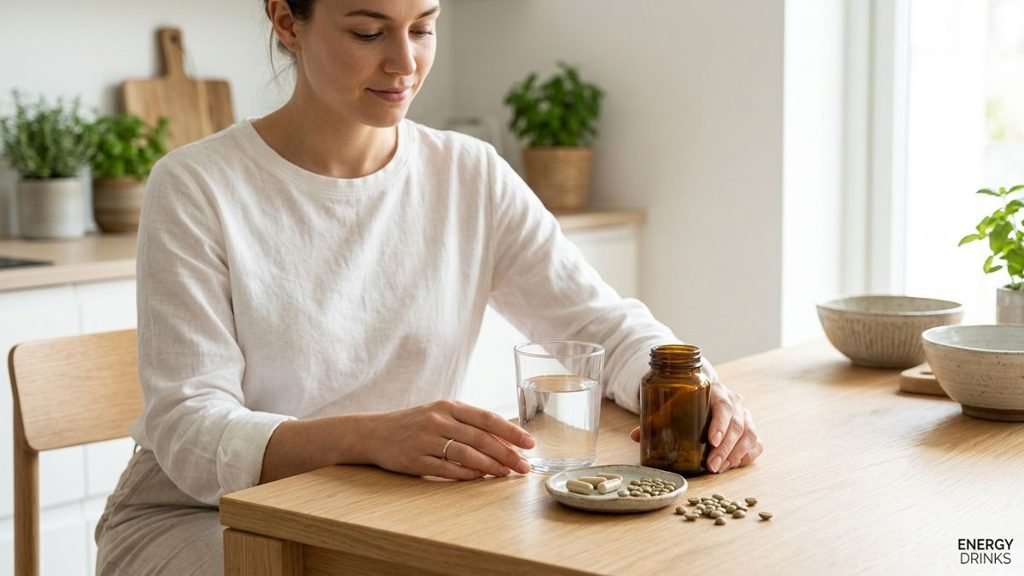
Green coffee extract is made by processing unroasted coffee beans to concentrate selected compounds. It is used in some dietary supplements and other products.
Its caffeine content can differ considerably from that of the original beans because the extraction process and final formulation determine the concentration.
Some products may also be decaffeinated or standardized to a particular caffeine level.
How to Check a Green Coffee Supplement
Before using a green coffee extract, check:
- The amount of extract in each serving.
- Whether the label states the caffeine content in milligrams.
- Whether the product is described as decaffeinated.
- The recommended serving size and warnings.
- Whether other caffeine-containing ingredients are included.
Do not assume that a capsule containing 400 mg of green coffee extract contains 400 mg of caffeine. Extract weight and caffeine weight are not the same thing.
If the product does not declare its caffeine content, contact the manufacturer rather than estimating the dose from the amount of extract alone.
Green coffee supplements should not be considered a proven treatment for obesity or disease simply because they contain caffeine or chlorogenic acids.
Is Green Coffee Caffeine Safe?
Caffeine can temporarily increase alertness, but its effects vary from person to person. The dose, timing, medications, health conditions, and individual sensitivity all matter.
The caffeine naturally present in green coffee beans is still caffeine. It should be counted alongside caffeine from regular coffee, tea, energy drinks, chocolate, supplements, and other sources.
How Much Caffeine Is Too Much?
The FDA cites 400 mg of caffeine per day as an amount not generally associated with negative effects for most healthy adults. This is a general reference point, not a recommended target for everyone or a guarantee that a lower amount will cause no side effects.
People who are sensitive to caffeine may experience symptoms at much lower amounts.
Possible Side Effects
Consuming too much caffeine can cause:
- Difficulty falling asleep or staying asleep.
- Nervousness, anxiety, or jitteriness.
- A faster heartbeat or palpitations.
- Upset stomach or nausea.
- Headaches and other unpleasant symptoms.
If you notice these effects, stop adding more caffeine and seek medical advice if symptoms are persistent, severe, or concerning. Serious symptoms such as a dangerously irregular heartbeat or seizures require urgent medical attention.
Who Should Be More Careful?
Pregnant or breastfeeding individuals, children and teenagers, people with certain heart conditions, and those taking medications that interact with caffeine may need additional precautions.
People who are pregnant should follow their healthcare professional’s advice on caffeine limits. Anyone with a relevant medical condition or questions about medication interactions should consult a qualified healthcare professional.
Also avoid consuming raw coffee beans simply to obtain caffeine without considering the dose and the possibility of digestive discomfort. A brewed beverage or a clearly labeled product makes intake easier to monitor.
Frequently Asked Questions
1. How much caffeine is in one green coffee bean?
The amount depends on the bean’s weight and caffeine concentration. For example, a bean weighing 0.15 grams with a caffeine concentration of 1.2% would contain approximately 1.8 mg of caffeine. This is an illustrative calculation, not a guaranteed amount for every green coffee bean.
2. Do green coffee beans contain more caffeine than roasted beans?
Both green and roasted coffee beans contain caffeine. Roasting can cause some caffeine loss and reduces bean mass through moisture loss and other changes. Consequently, caffeine per gram may change even when the total caffeine in the original bean remains relatively similar.
3. Which has more caffeine, Arabica or Robusta?
Robusta generally contains more caffeine than Arabica. Scientific reviews report broad dry-weight ranges of around 0.7%–1.7% for Arabica and 1.4%–3.3% for Robusta, although individual samples can fall outside these ranges.
4. Can you eat raw green coffee beans?
Green coffee beans are not usually eaten like ordinary snacks because they are hard and have a raw, grassy taste. Eating them also makes caffeine intake difficult to estimate. If you want to consume green coffee, choose a suitable food-grade preparation and follow its instructions rather than eating an unknown quantity of beans.
5. Does green coffee contain natural caffeine?
Yes. Caffeine occurs naturally in coffee seeds, including unroasted green coffee beans. It is one of the compounds produced by the coffee plant and is present before the beans are roasted or brewed.
6. Is green coffee caffeine stronger than regular coffee?
Caffeine itself does not become a different stimulant simply because it comes from green coffee. However, a green coffee preparation may deliver a different dose from a cup of roasted coffee, depending on the amount of coffee used and the extraction method.
7. How much caffeine is in a cup of green coffee?
The amount varies with the bean species, quantity, steeping time, water temperature, and preparation method. Without a measured result for the specific beverage, it is not possible to give a reliable universal figure.
8. Does green coffee extract contain caffeine?
Many green coffee extracts contain caffeine, but the amount depends on how the extract was processed and formulated. Some products are decaffeinated or standardized. Always check the label for caffeine per serving rather than relying on the extract’s total weight.
9. Can green coffee caffeine affect sleep?
Yes. Caffeine can interfere with sleep, particularly when consumed later in the day or by people who are sensitive to it. If you have trouble sleeping, consider reducing caffeine intake and avoiding caffeinated products close to bedtime.
10. How can I estimate my daily caffeine intake?
Add the caffeine from all the beverages, supplements, and foods you consume. Use product labels or reliable published estimates, and remember that coffee caffeine varies by serving size and preparation. If you are sensitive to caffeine or have a relevant medical condition, seek personalized guidance.
Conclusion
So, how much caffeine is in green coffee beans? A useful starting estimate is around 0.7%–1.7% by dry weight for Arabica and 1.4%–3.3% for Robusta, although individual varieties and samples can differ.
The amount in one bean depends on its weight and caffeine concentration. Roasting changes bean mass and composition but does not simply eliminate caffeine. Meanwhile, the caffeine in a finished beverage depends on how much is extracted during preparation.
If your goal is to monitor caffeine intake, focus on the actual quantity consumed rather than bean color, flavor, or species name alone. Check reliable research, measure ingredients carefully, and read supplement labels before use.
Understanding these differences makes it easier to compare green coffee with roasted coffee and other caffeinated products while making informed decisions about your daily intake.