Have you ever wondered whether a mint energy drink can help you feel more refreshed and alert? Mint is known for its cool, refreshing flavor, while energy drinks are commonly consumed for their caffeine related stimulating effects. Combining these ideas may sound appealing, but it is important to understand what a mint energy drink actually contains before choosing one.
Mint energy drink may refer to a commercially produced energy beverage with mint flavor, a drink containing mint and other caffeinated ingredients, or a homemade mint flavored beverage. These options are not necessarily the same. Some contain caffeine and added sugar, while others may simply be refreshing drinks made with fresh mint, lemon, and water.
In this guide, you will learn what mint energy drinks are, how caffeine affects the body, which ingredients to look for, their potential benefits and side effects, and how to make a refreshing homemade mint drink.
1. What Is a Mint Energy Drink?
A mint energy drink is generally understood to be an energy beverage that features a mint flavor or contains mint-derived ingredients. Depending on the product, it may also contain caffeine, sweeteners, vitamins, flavoring agents, or other ingredients commonly found in energy drinks.
The word mint describes the flavor or ingredient, not the drink’s caffeine content. A beverage can taste minty without providing a stimulant effect, and a mint-flavored energy drink may contain caffeine even when its taste seems light and refreshing.
There are three main options to understand:
- Mint-flavored energy drinks: Commercial beverages that combine a mint taste with caffeine or other energy-drink ingredients.
- Caffeinated energy mints: Small candies or mint products that contain added caffeine. These are not beverages, and their caffeine concentration can vary considerably.
- Homemade mint drinks: Beverages prepared with fresh mint, water, lemon, or other ingredients. They are usually caffeine-free unless a caffeinated ingredient is added.
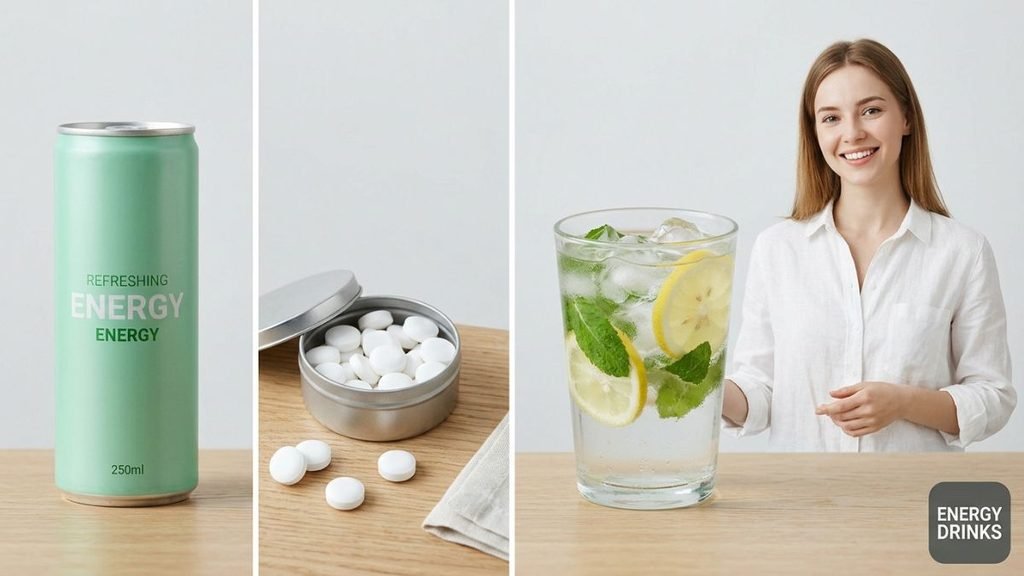
One important point is that not every brand offers a dedicated mint energy drink. Product availability changes between countries, and some products marketed as refreshing mint beverages are not energy drinks.
If you are shopping for a mint energy drink, check the product label instead of assuming that its flavor tells you what it does.
2. How Does a Mint Energy Drink Work?
The effect of a mint energy drink depends primarily on its ingredients. In a conventional caffeinated energy drink, caffeine is usually the main ingredient responsible for increased alertness.
Caffeine acts on the central nervous system and temporarily reduces the effects of adenosine, a chemical involved in signaling sleepiness. As a result, some people feel more awake and attentive after consuming caffeine.
Mint contributes mainly to flavor and aroma. The refreshing sensation associated with mint does not mean that the drink contains caffeine or that it provides a proven energy-boosting effect.
Other ingredients may include sugar, sweeteners, B vitamins, taurine, or guarana. Guarana naturally contains caffeine, so it is important to consider the total caffeine content from all sources.
The experience can vary from person to person. Someone who regularly consumes caffeine may notice a different effect from someone who rarely drinks it. Sleep quality, caffeine sensitivity, serving size, and other daily habits also matter.
For reliable guidance, the U.S. Food and Drug Administration explains that caffeine’s effects depend on the amount consumed and individual factors.
3. Popular Mint Energy Drink Flavors and Products
Mint is a recognizable flavor in beverages, but finding a commercially available energy drink specifically marketed as mint-flavored may require some research.
Mint-related beverage options can include:
Mint and Citrus
Mint paired with lemon or lime creates a crisp, citrus-forward flavor. In a commercial product, this combination may be used in a caffeinated beverage or a non-caffeinated sparkling drink.
Mint and Green Tea
Some beverages combine mint with green tea. However, green tea products differ in caffeine content, and a mint tea should not automatically be considered an energy drink.
Mint and Berry
Mint combined with berry flavors can produce a sweet, fruity taste. The ingredients and caffeine content depend on the specific formulation.

Homemade Mint and Lemon Drinks
Fresh mint, lemon, ice, and sparkling water can create a refreshing drink without added caffeine. This is a practical choice for readers who primarily want a cool mint flavor rather than a stimulant.
How to Find a Genuine Mint Energy Drink
Before purchasing a product, confirm these details:
- The manufacturer identifies it as an energy drink or clearly states its intended function.
- The ingredient list confirms mint flavoring or mint-derived ingredients.
- The label states the caffeine content or provides reliable information from the manufacturer.
- The product is available in your country.
- The nutrition information matches the exact can or bottle size.
Do not rely on an attractive product image or an online review alone. A product’s ingredients and nutrition label provide more useful information than its marketing description.
4. Common Ingredients in Mint Energy Drinks

The ingredients in a mint energy drink vary by brand. Understanding the most common categories can help you choose a product that suits your preferences.
| Ingredient | Why it may be included |
|---|---|
| Mint flavoring or mint extract | Adds a cool, herbal flavor |
| Caffeine | Helps increase alertness temporarily |
| Sugar | Adds sweetness and provides calories |
| Non-sugar sweeteners | Provide sweetness with little or no sugar |
| Green tea extract | May contribute caffeine and plant compounds |
| Guarana | A plant ingredient that naturally contains caffeine |
| Taurine | An ingredient commonly used in some energy drinks |
| B vitamins | Support normal metabolic functions |
| Carbonated water | Adds a sparkling texture |
Not every product contains all these ingredients. Some drinks use artificial flavorings, while others use plant extracts or combinations of natural and manufactured ingredients.
Does Mint Make an Energy Drink Healthier?
Not automatically. Mint may contribute flavor, but its presence does not cancel out the effects of caffeine or large amounts of added sugar.
Similarly, a product labeled natural is not necessarily caffeine-free or suitable for everyone. Evaluate the entire ingredient list and nutrition label rather than focusing on a single ingredient.
5. How Much Caffeine Does a Mint Energy Drink Contain?
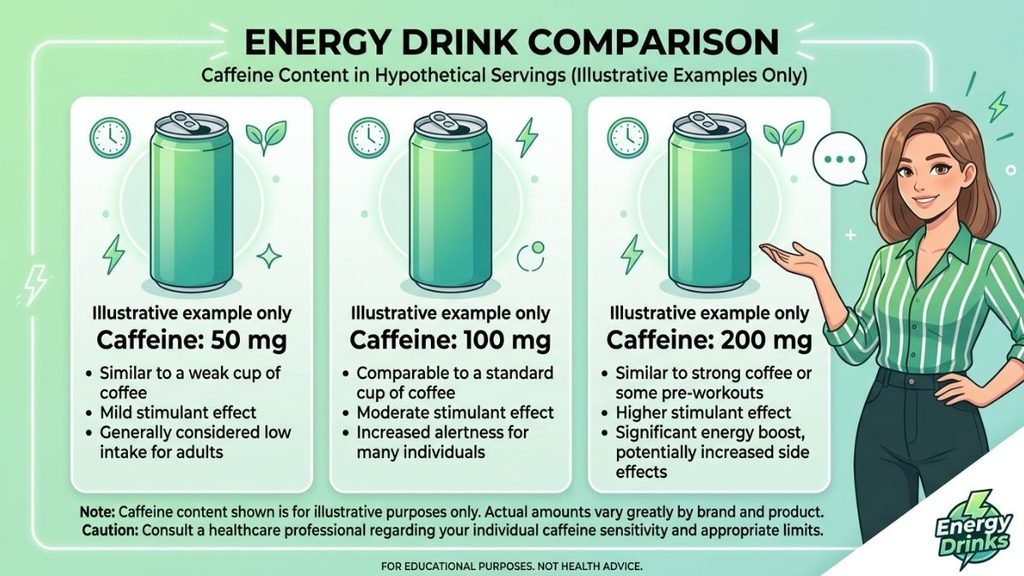
There is no single caffeine amount for all mint energy drinks. The total depends on the specific product, serving size, formulation, and any additional caffeine-containing ingredients.
For context, the FDA reports that energy drinks in the United States can contain approximately 41–246 milligrams of caffeine per 12 fluid ounces, with considerable variation between products. This is a general category range, not a measured value for mint-flavored energy drinks.
The following table illustrates how to interpret a label:
| Example serving | Caffeine amount | What it means |
|---|---|---|
| Product A | 50 mg | Lower caffeine amount than the other examples |
| Product B | 100 mg | Twice the caffeine in Product A |
| Product C | 200 mg | Four times the caffeine in Product A |
These are hypothetical examples, not verified commercial products.
How Much Caffeine Is Too Much?
According to the FDA, up to 400 mg of caffeine per day is an amount not generally associated with negative effects for most healthy adults. This is not a target or a guarantee of safety for every person.
Caffeine sensitivity varies. Some people experience anxiety, palpitations, digestive discomfort, or sleep problems at much lower amounts. Coffee, tea, chocolate, supplements, and other caffeinated products also contribute to daily intake.
If a product does not clearly state its caffeine content, contact the manufacturer or choose a product with more transparent labeling.
6. Potential Benefits of Mint Energy Drinks

The possible benefits depend on whether the drink contains caffeine, sugar, or other active ingredients. Mint flavor itself should not be confused with a clinically established energy or performance benefit.
Temporary Increased Alertness
Caffeinated energy drinks may help some adults feel more awake for a period of time. The effect comes primarily from caffeine rather than the mint flavor.
However, caffeine does not replace adequate sleep. Depending on the amount and timing, it can also make it harder to fall asleep later.
A Refreshing Flavor
Some people prefer mint because it offers a cool, herbal taste. Pairing mint with citrus or sparkling water may make a beverage more appealing to people who dislike very sweet drinks.
Flexible Sugar Choices
Mint-flavored beverages may be available in sweetened, sugar-free, or unsweetened versions. Checking the label can help you select an option that matches your dietary preferences.
An Alternative to Very Sweet Beverages
A homemade mint drink prepared with water, fresh mint, lemon, and little or no added sugar can provide flavor without the caffeine found in many energy drinks.
Important Limitations
There is insufficient evidence to conclude that a mint-flavored energy drink is inherently healthier or more effective than another energy drink with a similar caffeine content.
Do not rely on claims that mint energy drinks detoxify the body, burn fat, cure fatigue, or guarantee better athletic performance. Such claims require appropriate scientific evidence and should not be accepted simply because they appear in marketing.
7. Possible Side Effects and Safety Considerations
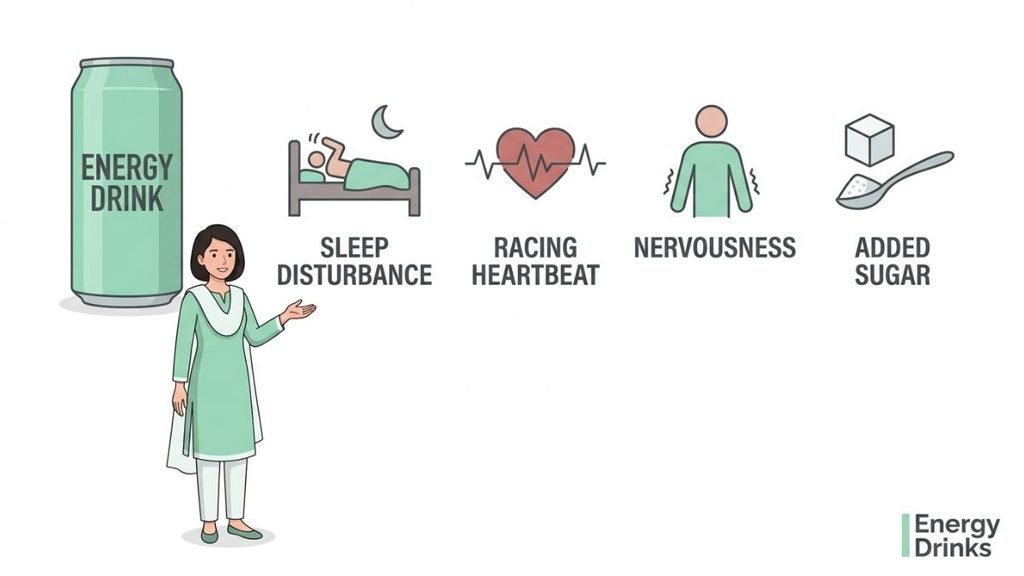
Mint energy drinks can cause side effects when they contain substantial amounts of caffeine or sugar. The level of risk depends on the formulation, amount consumed, and individual health circumstances.
Sleep Problems
Caffeine can interfere with sleep, particularly when consumed later in the day. Poor sleep may then contribute to tiredness the following morning.
Nervousness and Anxiety
Some people experience restlessness, jitteriness, or increased anxiety after consuming caffeine. These effects may be more noticeable in people who are sensitive to stimulants.
Increased Heart Rate
Caffeine can temporarily increase heart rate or blood pressure in some individuals. Excessive intake may cause palpitations and other concerning symptoms.
Digestive Discomfort
Caffeine and certain beverage ingredients may cause nausea, stomach discomfort, or other digestive symptoms in susceptible individuals.
Added Sugar
Regular energy drinks can contain considerable amounts of added sugar. Frequent consumption of sugary drinks is associated with health concerns, including weight gain and tooth decay.
Who Should Be Especially Careful?
- Children and teenagers: Health authorities advise against energy drinks for this age group because of caffeine and other stimulant ingredients.
- Pregnant or breastfeeding people: Ask a healthcare professional about appropriate caffeine limits.
- People with heart conditions, anxiety, or caffeine sensitivity: Seek individualized advice before consuming caffeinated energy drinks.
- People taking medications: Ask a pharmacist or healthcare professional whether caffeine could affect your medication or symptoms.
Avoid combining multiple high-caffeine products without calculating your total intake. Never use highly concentrated caffeine powder as a DIY energy-drink ingredient.
If you develop severe chest pain, fainting, difficulty breathing, or a dangerously rapid or irregular heartbeat after consuming a caffeinated product, seek urgent medical care.
8. Are Sugar-Free Mint Energy Drinks Better?

Sugar-free mint energy drinks may be useful for people who want to reduce their intake of added sugar. However, sugar-free does not mean caffeine-free, stimulant-free, or automatically healthy.
Consider these factors before making a choice.
Sugar Content
Compare the total sugar per serving, not just the wording on the front of the can. Also check the serving size, since one container may contain more than one serving.
Caffeine Content
A sugar-free drink can still contain as much caffeine as a regular version. Always compare caffeine amounts separately from sugar amounts.
Sweeteners
Some sugar-free products use sweeteners such as sucralose or aspartame. If you prefer to avoid particular sweeteners, review the ingredient list.
Calories
Sugar-free options often contain fewer calories than comparable sugar-sweetened drinks, although the actual difference depends on the product.
Which Option Should You Choose?
If you want caffeine, prioritize a clearly labeled product with an appropriate caffeine amount and a sugar level that fits your preferences.
If you simply want mint flavor and refreshment, unsweetened mint water may be a more straightforward choice.
The best option is the one that matches your actual needs, rather than the one with the strongest marketing claims.
9. Mint Energy Drinks vs. Caffeinated Energy Mints vs. Mint Tea
These products may sound similar, but their ingredients and intended uses are different.
| Feature | Mint energy drink | Caffeinated energy mints | Mint tea |
|---|---|---|---|
| Form | Liquid beverage | Small candy or mint | Brewed beverage |
| Mint flavor | Depends on product | Depends on product | Common in peppermint tea |
| Caffeine | Varies by product | Varies by product | Depends on the tea ingredients |
| Added sugar | May contain sugar or sweeteners | Depends on formulation | Usually none if unsweetened |
| Main consideration | Check caffeine and nutrition labels | Check caffeine per mint and serving | Check whether the tea contains caffeinated tea leaves |
Which Is Better for Alertness?
If your goal is to feel more alert, caffeine content is more relevant than the mint flavor. A caffeinated energy mint may contain a concentrated amount of caffeine in a small serving, so carefully follow its label.
Peppermint herbal tea is generally caffeine-free when made solely from peppermint leaves. However, products blended with green or black tea may contain caffeine.
Which Is Better for Refreshment?
An unsweetened mint tea or homemade mint water may be sufficient if you mainly want a refreshing drink without caffeine.
For a fair comparison, examine the serving size, caffeine amount, sugar, and ingredients rather than assuming that all mint products have the same effects.
10. How to Choose a Mint Energy Drink
Finding a product that tastes good is only one part of choosing an energy drink. A few simple checks can help you make a more informed decision.
Step 1: Define Your Goal
Are you looking for a caffeine boost, a refreshing flavor, a low-sugar beverage, or something to drink while studying or working?
If you only want mint flavor, a non-caffeinated beverage may meet your needs without unnecessary stimulants.
Step 2: Check the Caffeine Amount
Look for caffeine listed in milligrams per serving and per container, where available. Include caffeine from guarana, tea extracts, and other sources when the label provides this information.
Step 3: Compare Added Sugar
Choose a sugar level that fits your preferences and dietary needs. If you are reducing added sugar, compare the nutrition panels of several options.
Step 4: Read the Full Ingredient List
Check for sweeteners, allergens, herbal extracts, and other ingredients you may wish to avoid.
Step 5: Verify the Product
Use the manufacturer’s official website or packaging to confirm the flavor, formulation, caffeine amount, and availability in your country.
Step 6: Consider Timing and Personal Tolerance
If you are sensitive to caffeine or experience sleep problems, a caffeinated beverage may not be the right choice. Avoid using energy drinks to compensate for persistent tiredness or insufficient sleep.
Quick buying tip: If a product’s caffeine amount is unclear, its health claims seem exaggerated, or its ingredients are not transparent, consider choosing a better-labeled alternative.
11. How to Make a Homemade Mint Energy Drink

If you enjoy the taste of mint but do not need caffeine, you can prepare a simple homemade mint drink. This recipe offers refreshing flavor without relying on commercial energy-drink stimulants.
Ingredients
- 8–10 fresh mint leaves
- 250–300 ml cold water
- 2–3 lemon slices
- Ice cubes, as desired
- A small amount of honey or another sweetener, optional
- A little sparkling water, optional
Instructions
- Wash the mint leaves thoroughly.
- Gently press the leaves to release their aroma without crushing them into a paste.
- Add the mint and lemon slices to a glass or jug.
- Pour in the cold water and stir.
- Add ice and let the drink stand for about 5 minutes.
- Add sparkling water if you prefer a fizzy texture.
- Taste before adding any sweetener.
Your homemade mint drink is ready to serve.
Can You Add Caffeine?
You can prepare a mint-flavored beverage using a known, labeled caffeinated tea as an ingredient, but the final caffeine amount will depend on the tea, preparation method, and serving size.
For most home recipes, avoid adding pure caffeine powder or concentrated caffeine products. Measuring these substances incorrectly can cause serious harm.
Remember that this homemade recipe is a refreshing beverage, not a clinically proven energy drink. Fresh mint and lemon do not provide the same stimulant effect as caffeine.
12. Frequently Asked Questions
What is a mint energy drink?
A mint energy drink is generally a beverage with mint flavor that may also contain caffeine and other energy-drink ingredients. Its exact formulation depends on the product.
Do mint energy drinks contain caffeine?
Some may contain caffeine, while others do not. Check the ingredient list and nutrition information to confirm the amount.
Are mint energy drinks healthy?
Not automatically. Their nutritional value depends on caffeine, sugar, serving size, and other ingredients. Mint flavor alone does not make a drink healthier.
Are there sugar-free mint energy drinks?
Availability varies by brand and country. If you find one, check its label to confirm that it is sugar-free and review its caffeine content separately.
Can I drink a mint energy drink every day?
That depends on its caffeine and sugar content, your total daily intake, and your individual health circumstances. Regular consumption is not necessary for good health, and high-caffeine products may not suit everyone.
Does mint provide an energy boost?
Mint mainly contributes flavor and aroma. The stimulating effect of a caffeinated energy drink comes primarily from caffeine, not from the mint flavor itself.
Is mint tea the same as a mint energy drink?
No. Peppermint tea made solely from peppermint leaves is generally caffeine-free, while a mint energy drink may contain caffeine, sugar, and other added ingredients. Tea blends can differ.
Can I make a mint energy drink at home?
You can make a refreshing mint beverage with fresh mint, lemon, and water. It will not provide a caffeine-related energy boost unless a caffeinated ingredient is included.
Are caffeinated energy mints the same as mint energy drinks?
No. Energy mints are solid products that may contain added caffeine, while energy drinks are liquids. Their caffeine amounts and serving sizes can differ considerably.

13. Final Verdict
A mint energy drink may appeal to people who enjoy a cool, refreshing flavor and want a different alternative to traditional energy-drink tastes. However, the mint flavor does not determine how much caffeine a product contains or whether it is a healthy choice.
Before buying one, verify the product’s ingredients, caffeine amount, sugar content, and serving size. Remember that sugar-free products can still contain caffeine, and not every mint-flavored beverage is an energy drink.
If you mainly want refreshment rather than stimulation, homemade mint water or unsweetened peppermint tea may be suitable alternatives. If you choose a caffeinated product, pay attention to your total caffeine intake and personal tolerance.